Why Are You Following?
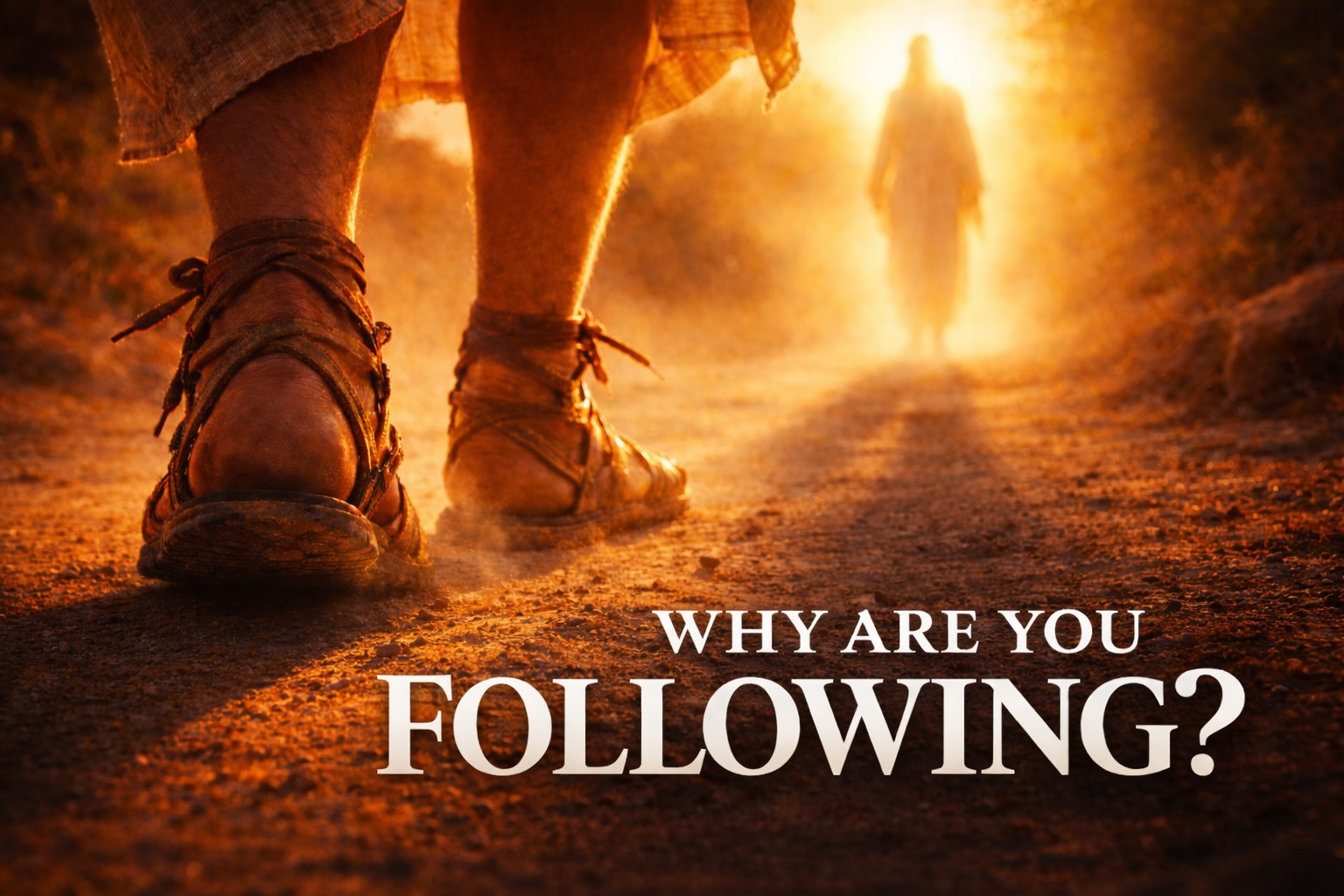
Why Do We Follow Jesus? Moving from the Crowd to Commitment
In our spiritual journey, we often find ourselves asking a fundamental question: Why do we follow Jesus? While many claim to follow Him, the deeper question isn't whether we're following, but rather the motivation behind our following. Understanding this distinction can transform our entire relationship with God.
Two Types of Followers
In Matthew 4:23-5:1, we see a powerful illustration of two distinct groups around Jesus. The passage tells us: "And Jesus went about all Galilee, teaching in their synagogues, preaching the gospel of the kingdom, and healing all kinds of sicknesses and all kinds of disease among the people... Great multitudes followed him from Galilee and from Decapolis, Jerusalem, Judea and beyond the Jordan. And seeing the multitudes, he went up to the mountain, and when he was seated, his disciples came to him."
Both groups were physically present with Jesus. Both heard His teachings and witnessed His miracles. But only one group experienced true transformation. There was the crowd - those who followed for what they could get - and the committed - those who followed for who Jesus was.
What Draws the Crowd?
People are naturally drawn to power, provision, and miracles. Even non-believers celebrate when someone is healed or when unexpected financial help arrives. The crowd followed Jesus because they were attracted to His acts of power, not necessarily to His person.
This reveals an uncomfortable truth: it's possible to follow Jesus without truly knowing who He is or being committed to Him. In John 6:26, Jesus confronted this very issue, telling the crowd: "Most assuredly, I say to you, you seek me not because you saw the signs, but because you ate the loaves and were filled."
The Danger of Crisis Christianity
Many people develop what could be called "crisis Christianity" - turning to God only during emergencies. When someone is sick, relationships are failing, or finances are tight, prayers increase. But what happens when those needs are met? Often, the prayers dry up until the next crisis arrives.
This pattern creates a transactional relationship with God rather than a transformational one. God becomes like a resource to use rather than a relationship to pursue. We all know people who only call when they need something - and that's not the kind of relationship God desires with us.
Moving Beyond the Vending Machine Mentality
God doesn't want to be our "vending machine Jesus" - where we put in a prayer and expect something out. He desires genuine fellowship, just as He had with Adam and Eve in the Garden of Eden, walking and talking with them daily.
Prayer should be a two-way conversation. While we're good at presenting our laundry list of needs, we often forget the quiet time where we listen to what God is saying back to us.
The Call to Go Higher
When Jesus went up the mountain, He didn't force anyone to follow. Those who were hungry for more made the choice to climb. This represents God's call for us to move beyond comfortable Christianity into deeper relationship.
Consider Peter's response when the disciples encountered Jesus walking on water during a storm. All twelve disciples saw the same Jesus, were in the same boat, and faced the same storm. But only Peter had the desire to get closer, saying "Call me out there." The committed step out when God speaks, even when it doesn't look safe.
Why Comfort Zones Hold Us Back
Change doesn't happen when we're comfortable. Just as a caterpillar must struggle to become a butterfly, spiritual transformation requires us to move beyond our comfort zones. We can become skilled at doing church activities while maintaining spiritual distance from God.
Busyness in church work can actually hide spiritual distance because no one sees it except you and God. Just because someone is active in ministry doesn't automatically mean they're close to God.
The Difference Between Closeness and Connection
You can stand physically close to someone and still be distant at heart. We experience this daily - on public transportation, in grocery store lines, at work. Physical proximity doesn't equal relational connection.
Similarly, walking through church doors doesn't automatically mean you're connected to God. Sitting in a pew every week doesn't guarantee you truly know who God is. The question becomes: Are you an acquaintance of God or a friend of God?
What God Really Wants
Jeremiah 29:13 makes God's desire clear: "You will seek me and find me when you seek me with your whole heart." God doesn't want half a relationship - He wants your whole heart. As Revelation 3:15-16 warns about lukewarm faith: "Because you are lukewarm, I will spit you out."
James 4:8 provides the solution: "Draw near to God and he will draw near to you." Unlike humans who sometimes need space, God never gets tired of your closeness. The closer you get to Him, the more He draws you in.
Where Transformation Happens
The mountain represents where change occurs. When Moses went up the mountain to meet with God, he came down glowing - visibly transformed by the encounter. The same God who transformed Moses wants to transform you.
These biblical stories aren't just nice tales for children's church - they're examples of what God wants to do in our lives today. He's the same God, offering the same transformational relationship.
The Work Required
Spiritual growth, like physical fitness, requires intentional effort. You don't get stronger just by buying a gym membership or watching workout videos. Similarly, you don't grow spiritually just by attending church or having Christian family members.
It takes consistency, discipline, and effort. This includes spending quiet time with God, reading His Word, and building that personal relationship beyond just asking for things.
Moving from Religion to Relationship
God isn't calling us to be more religious - the world has enough religious people. He's calling us to authentic relationship. This isn't about being busier in church activities; it's about genuine connection with Him.
When you have a real relationship with God, service flows naturally. You pick up trash in His house because you know it's God's house. You speak life over coworkers because you carry His love. You become His hands and feet in the world.
The Continuous Journey
Transformation is ongoing. God is always growing us, always calling us higher. No matter how long you've been following Him, there's always more. If God gave you breath this morning, He still has work for you to do.
You could read the Bible for 100 years and still discover new truths because it's the living Word. God reveals new things based on where you are in your journey.
Life Application
This week, honestly evaluate your relationship with God. Are you part of the crowd, following for what you can get? Or are you among the committed, climbing the mountain for deeper relationship?
Challenge yourself to move beyond crisis Christianity. Instead of only praying when you need something, spend time simply being in God's presence. Practice two-way prayer - speak to Him, then listen. Read His Word not just for information, but for transformation.
If God is calling you to step out of your comfort zone in some area, take that step. Like Peter walking on water, you may feel uncertain, but Jesus is there to catch you if you stumble.
Ask yourself these questions:
- Do I only turn to God during crises, or do I maintain consistent fellowship with Him?
- Am I content with comfortable Christianity, or am I hungry for deeper relationship?
- When God calls me to step out, do I respond with obedience or make excuses?
- Is my relationship with God transactional (what I can get) or transformational (who He is)?
God has more peace, purpose, and presence available for you. The question is: Will you leave the crowd and climb the mountain to receive it?